Link Rot: only half of the links on 2005’s Million Dollar Homepage are still reachable

In 2005 a young man from England created a website called The Million Dollar Homepage and sold advertising space on it. The page is a 1000 × 1000 pixel grid (1,000,000 pixels) and he sold the pixels for $1 each. The page has 2,816 links in it. A recent analysis of all the links reveal that only 1,780 are still reachable. From Harvard’s Library Innovation Lab : Over the decade or so since the Million Dollar Homepage sold its last pixel, link rot has ravaged the site’s embedded links. Of the 2,816 links that embedded on the page (accounting for a total of 999,400 pixels), 547 are entirely unreachable at this time. A further 489 redirect to a different domain or to a domain resale portal, leaving 1,780 reachable links. Most of the domains to which these links correspond are for sale or devoid of content. The 547 unreachable links are attached to graphical elements that collectively take up 342,000 pixels (face value: $342,000). Redirects account for a further 145,000 pixels (face value: $145,000). While it would take a good deal of manual work to assess the reachable pages for content value, the majority do not seem to reflect their original purpose. Though the Million Dollar Homepage’s pixel canvas exists as a largely intact digital artifact, the vast web of sites which it publicizes has decayed greatly over the course of time. [ via Clive Thompson ]

Read this article:
Link Rot: only half of the links on 2005’s Million Dollar Homepage are still reachable
Windows 10 Creators Update now available to all, November Update end-of-life’d

Enlarge / The announcement of the Creators Update in October 2016. (credit: Ars Technica) Some four months after its initial release, Microsoft says it has opened the floodgates and is now pushing out Windows 10 version 1703, the Creators Update, to every compatible PC (a category that excludes systems using Intel’s Clover Trail Atoms ). Earlier this month, AdDuplex, which tracks the penetration of the different Windows 10 versions, reported that as of July 18, the Creators Update had just passed 50 percent of Windows 10 systems. Forty-six percent are on the previous version, 1607 (aka the Anniversary Update). Until now, the deployment of the Creators Update has been throttled to stage its rollout. That throttle is now removed, so most of that 46 percent should now start upgrading. Microsoft is also saying that with this full rollout, enterprise customers should have confidence deploying the update. With Microsoft getting rid of the “Current Branch” and “Current Branch for Business” nomenclature , this is the closest thing to a signal that the version is enterprise-ready. Read 1 remaining paragraphs | Comments

View article:
Windows 10 Creators Update now available to all, November Update end-of-life’d

How a podcaster managed to confront his tech support scammer, in person

Enlarge / This November 2015 photo appears to be a company photo of Accostings, which Reply All identified as an India-based tech support scam company. Kamal Verma is standing in a black shirt with a watch in the center of the photo. (credit: Kamal Verma ) The following post contains spoilers of Reply All episode #102: Long Distance , which was released on July 27, 2017. If you don’t wish to know what happens in that episode, read no further. Here at Ars, we are no strangers to online tech support scammers. For years now, we have played along with scammers, cajoled them, and called them out on their tricks . Such scams are notoriously difficult to shut down. But we never even dreamed of doing what the podcast Reply All has done  in an amazing episode that was released Thursday morning: doggedly pursue corporate records, find Facebook profiles of at least one company executive, and even manage to have extended conversations with one of them before trying to confront him. In person. In India. Read 93 remaining paragraphs | Comments

View original post here:
How a podcaster managed to confront his tech support scammer, in person

US scientists have genetically modified human embryos

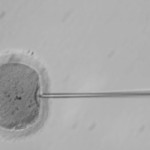
A team of scientists from Oregon have performed the first known instance of gene editing on human embryos in the US, according to MIT’s Tech Review . Shoukhrat Mitalipov from Oregon Health and Science University and his team have reportedly corrected defective genes that cause inherited diseases in “a large number of one-cell embryos” using CRISPR . Mitalipov refused to comment on the results of the project, but some of his collaborators already confirmed them to the publication. Up until now, reports about human-related gene editing usually come from outside the US. China, in particular, hasn’t been holding back when it comes to CRISPR experimentation. Scientists from the country were the first to use the technique on human embryos to repair a gene that causes fatal blood disorder. A team of oncologists from Sichuan University also conducted the first CRISPR human trial on a patient suffering from an aggressive form of lung cancer. In the US, Congress blocked clinical trials that involve genetically modifying human embryos. The practice raises a lot of ethical concerns, after all, with critics being especially worried that it could lead to designer babies. The National Academy of Sciences issued a report in early 2017 endorsing human germline modification, though, and that’s exactly what Mitalipov’s group did. Modifying an embryo to eradicate heritable diseases is called “germline engineering, ” because the child born from that embryo will pass on the changes with his or her germ (egg or sperm) cells. We won’t find out if that’s true with Mitalipov’s study, because it was never meant to be a clinical trial. The team didn’t allow the embryos to develop for more than a couple of days, and they were never meant to be implanted into a womb. What we’ve found out, however, is that it’s possible to use CRISPR to edit embryos without causing an error called “mosaicism.” In previous attempts by Chinese scientists, CRISPR caused an editing error wherein the DNA changes they made were only taken up by some, not all, of the cells the embryos developed. The Oregon group managed to avoid that problem by injecting CRISPR segments — DNA segments used to cut out unwanted genes — and sperm cells into the eggs at the same time. It’s unclear what illnesses were involved exactly, but they used sperm donated by subjects with various inheritable diseases. One of the scientists familiar with the study told Tech Review : “It is proof of principle that it can work. They significantly reduced mosaicism. I don’t think it’s the start of clinical trials yet, but it does take it further than anyone has before.” The team’s results are still pending publication, so we’ll likely hear more details about the study in the future. Source: MIT Technology Review

Read More:
US scientists have genetically modified human embryos

A big chunk of Leonardo da Vinci’s notebooks have been digitized and can be viewed online

The British Library has digitized 570 loose pages of notes written and drawn by Leonard da Vinci to compile a notebook which is called, The Codex Arundel . You can view the document online for free, although it’s written in Italian and uses his “characteristic left-handed mirror-writing (reading from right to left).” The Guardian suggests enjoying the work of the self-taught Renaissance man as it is, without translation: The digitised British Library manuscript is a fascinating artefact in itself, just to browse. You don’t need a translation to appreciate the beauty and wonder of Leonardo’s mind. This is a great work of art, in a precociously conceptual genre that has been emulated by modern artists such as Joseph Beuys and Cy Twombly. The Codex includes “diagrams, drawings and brief texts” which cover “a broad range of topics in science and art, as well as personal notes.” The British Library describes some of Da Vinci’s insights: His notebooks combine detailed observation with notes of experiments. Even if he did not actually undertake the experiments, he described what could be tried. Many of his insights foreshadowed scientific research by many centuries. For example: Leonardo repudiated perpetual motion, understood the principle of relative motion, and foreshadowed Newton’s Third Law by two centuries: “For every action there is an opposite and equal reaction.” He rejected the notion that the Biblical flood was responsible for depositing fossils many miles from their origin and deduced the existence of very long spans of geological time. By dissecting humans and animals, Leonardo made many anatomical and some physiological discoveries. He investigated optics and perception with subtle experiments, explaining why the sky is blue, arguing that light has a finite velocity and travels in straight lines, and deducing the existence of a surface within the eye that receives light from a wide field of view. Leonardo formulated the law of the flow of currents: “All motion of water of uniform breadth and surface is stronger at one place than at another according as the water is shallower there than at the other.” ( Open Culture ) Previously: Students build working version of Leonardo da Vinci’s self-supporting bridge

Continue Reading:
A big chunk of Leonardo da Vinci’s notebooks have been digitized and can be viewed online

USB 3.2 doubles your connection speeds with the same port

Your future computer or phone will be capable of stupidly fast transfer speeds. The USB 3.0 Promoter Group unveiled the USB 3.2 specification that effectively doubles the current USB 3.1 spec by adding an extra lane. As such, it will allow for two lanes of 5 Gbps for USB 3.0, yielding 10 Gbps, or two lanes of 10 Gbps for 20 Gbps with USB 3.1. As a bonus, the “superspeed” USB-C cable you’re currently using already has the capability for dual-lane operation built in. By way of example, the group says that a USB 3.2 host connected to a USB 3.2 storage device will be capable of 2GB/s transfer over a “superspeed” certified USB 3.1 cable. “When we introduced USB Type-C to the market, we intended to assure that USB Type-C cables and connectors certified for SuperSpeed USB or SuperSpeed USB 10 Gbps would, as produced, support higher performance USB as newer generations of USB 3.0 were developed, ” said USB 3.0 Promoter Group Chairman Brad Saunders. You should take those Thunderbolt-like numbers with a grain of salt, however. USB 3.0 or 3.1 devices (which confusingly use USB-C cables) rarely come close to their certified speeds. For instance, WIrecutter found that the fastest USB 3.0 flash drive, the Extreme CZ80, could read and write at 254 MB/s and 170 MB/s, tops — half of what USB 3.0 is capable of. (Some USB 3.1 superspeed SSD drives can saturate a USB 3.0 connection, however.) Still, flash storage is advancing rapidly, thanks to 64-layer and higher tech from Toshiba , Intel, Samsung and WD, and those kind of speeds are handy if you’re editing RAW or 4K video. The USB 3.0 Promoter Group (with Apple, HP, Intel, Microsoft and others as members) says that the 3.2 spec will be finalized by the end of 2017, so don’t expect to see any devices until then. In the meantime, we’ll hear more about it in September this year in North America during the USB Developer Days. Source: USB 3.0 Promoter Group

View original post here:
USB 3.2 doubles your connection speeds with the same port

AT&T Loses Record Number of Traditional TV Subscribers In Q2, Drops 156,000 DirecTV Satellite Customers

According to Variety, AT&T’s pay-TV business has lost a record 351, 000 traditional video customers in the second quarter, with the internet-delivered DirecTV Now service failing to fully offset the losses. From the report: In Q2, historically a seasonally weak period for the pay-TV business, DirecTV’s U.S. satellite division lost 156, 000 customers sequentially, dropping to 20.86 million, compared with a gain of 342, 000 in the year-earlier quarter. AT&T’s U-verse lost 195, 000 subs in the quarter, which was actually an improvement over the 391, 000 it lost in Q2 of 2016. AT&T touted that it gained 152, 000 DirecTV Now customers in Q2, after adding just 72, 000 in the first quarter of 2017. Overall, it had signed up 491, 000 DirecTV Now subs as of the end of June, after the OTT service launched seven months ago. Read more of this story at Slashdot.

More:
AT&T Loses Record Number of Traditional TV Subscribers In Q2, Drops 156,000 DirecTV Satellite Customers

MAME devs are cracking open arcade chips to get around DRM

Enlarge / A look inside the circuitry of a “decapped” arcade chip. (credit: Caps0ff ) The community behind the Multiple Arcade Machine Emulator (MAME) has gone to great lengths to preserve thousands of arcade games run on hundreds of different chipsets through emulation over the years. That preservation effort has now grown to include the physical opening of DRM-protected chips in order to view the raw code written inside them—and it’s an effort that could use your crowdsourced help. While dumping the raw code from many arcade chips is a simple process, plenty of titles have remained undumped and unemulated because of digital-rights-management code that prevents the ROM files from being easily copied off of the base integrated circuit chips. For some of those protected chips, the decapping process can be used as a DRM workaround by literally removing the chip’s “cap” with nitric acid and acetone. With the underlying circuit paths exposed within the chip, there are a few potential ways to get at the raw code. For some chips, a bit of quick soldering to that exposed circuitry can allow for a dumped file that gets around any DRM further down the line. In the case of chips that use a non-rewritable Mask ROM , though, the decappers can actually look through a microscope (or high-resolution scan) to see the raw zeroes and ones that make up the otherwise protected ROM code. Read 5 remaining paragraphs | Comments

Originally posted here:
MAME devs are cracking open arcade chips to get around DRM

Parisian canals now open to swimmers

Paris, France is making good on its promise to reopen long polluted waterways to bathers. Up to three hundred people at any time can use the lifeguard-protected pools, although the pools only have locker space for 80. Located in a part of Paris already popular as a place to stroll in fine weather, the new bathing spot is likely to prove a major hit in an already hotter-than-average summer. Early reports suggest that the water is indeed delightful, though a small residuum of green algae does make a post-bathe shower a good idea. How did Paris pull this off? The city’s been working on cleaning up the waters here for decades. Paris’s canals here were once unsurprisingly filthy, running as they do through a former industrial area once packed with cargo barges and polluted by sewage. Since the 1980s, however, regulations managing industrial run-off have tightened substantially, while Paris has invested heavily in wastewater treatment and in preventing sewage from being discharged into the canal during periods of high water. Two years ago, following a concerted clean-up, bacteria levels dropped below safe levels, and rogue bathers have been jumping in the water here for a while. Meanwhile, the Canal Saint Martin, which runs downstream from the basin down to the Seine, was entirely drained and cleaned in 2016, a process that sent a powerful visual message to Parisians that the area’s historic filth was being swept away. Via CityLab

Read More:
Parisian canals now open to swimmers

Adobe is ending development and support for Flash in 2020

Adobe announced today that it is ending support for and development of Flash in 2020. The company cited declining usage statistics (80 percent of Chrome users visited a site with Flash daily in 2014, as compared to 17 percent today) and a plethora of alternatives as the reason for the termination. Developing… Via: Axios Source: Adobe

Continue reading here:
Adobe is ending development and support for Flash in 2020